


Key facts
- Smurfing means an experienced player uses a new or low-ranked account to play against opponents below their real skill level.
- A smurf account is the secondary account used to do it. The player’s original, higher-ranked account is usually called the main.
- The term is usually traced to 1990s Warcraft II players who used Smurf-themed names to beat newcomers.
- Riot Games began cracking down on smurfing and boosting in League of Legends with patch 25.18 in September 2025.
- Smurfing is not the same as boosting, alt accounts or throwing, even though people often use the words interchangeably.
Smurfing in games means an experienced player uses a new or low-ranked account, called a smurf account, to play against opponents who are far below their real skill level. The result is usually a lopsided match, a frustrated lobby of newcomers and one player having a very easy night. If you’ve ever been flattened by a “level 4” player who moves like a pro, you’ve probably met one.
What does smurfing mean in games?
Smurfing means playing on a secondary account whose rank or level is lower than your true skill, so matchmaking puts you against weaker players. The account itself is the smurf, and the player’s original account is called the main. Think of it as a veteran in a beginner’s jersey.
The three parts of a smurf
Every smurfing situation has the same three pieces:
| Part | What it is | Example value |
|---|---|---|
| The player | Someone with real experience and skill | A Diamond-level League of Legends player |
| The account | A new or low-ranked secondary account | A fresh account at level 30 with no rank |
| The mismatch | Opponents placed by the account’s rank, not the player’s skill | Iron and Bronze opponents |
The account level doesn’t fool the player. It fools the matchmaking system, at least until the system catches up.
Why the definition gets blurry
Publishers and players don’t always use the word the same way. In casual chat, “smurf” means anyone who looks too good for their rank. Riot Games uses a broader, more technical definition. Riot defines smurfing as deliberately bypassing matchmaking systems to play in lobbies that do not match a player’s actual skill, including using accounts played by others.
That broader definition matters because it pulls in boosting and account sharing, which most players treat as separate offenses. Riot’s Drew Levin summed it up bluntly: “Boosting is smurfing-technical term versus colloquial term.”
So there are really two definitions in use. The everyday one is a skilled player on a low account. The publisher one is anyone whose account rank doesn’t match the person actually holding the controller. For most conversations, the everyday one is what people mean.
Heads up: Being good isn’t proof of smurfing. Plenty of players come over from similar games, like a Counter-Strike veteran trying Valorant, and play well above their new account’s rank without breaking any rule.
Smurfing is one of those terms that sounds like nonsense until someone explains it, which is exactly why it sits in our gaming glossary next to other slang you hear in voice chat every night.
Where does the term smurfing come from?
The term smurfing is usually traced to Warcraft II in the mid-1990s, when two skilled players made new accounts named after Smurf characters to beat newcomers. The story most players tell goes like this: two well-known players on Blizzard’s online service were so recognizable that opponents stopped challenging them. So they made fresh accounts with Smurf-themed names and kept beating unsuspecting players, who had no idea who they were facing.
The details have been retold so many times that they’re more legend than record. The core idea held up, though. A known strong player hides behind a harmless-looking name and new account, and the lobby finds out the hard way.
How the word spread
The term grew alongside online matchmaking. Early games mostly let players pick their own opponents, so smurfing was about hiding your reputation. Once ranked ladders and automatic matchmaking took over in the 2000s and 2010s, the meaning shifted. Now it’s less about hiding your name and more about cheating the rank system.
Today the word covers every genre with ranked play:
- MOBAs like League of Legends and Dota 2
- Tactical shooters like Valorant and Counter-Strike 2
- Hero shooters like Overwatch 2
- Battle royales with skill-based matchmaking
- Fighting games and card games with online ladders
Why “smurf” stuck
The name stuck because it’s harmless on purpose. Smurfs are small, blue and adorable, which is exactly what a new account looks like to an opponent. It’s a decent joke, and gamers have never been known to give up a decent joke.
It’s a bit like the old pickup basketball story of a former college player showing up at the rec center in sweatpants. Nobody’s checking résumés at the door, and by the third possession, everybody knows. Smurfing is the online version of that, with a ranked ladder instead of a rec center.
How does smurfing work in online games?
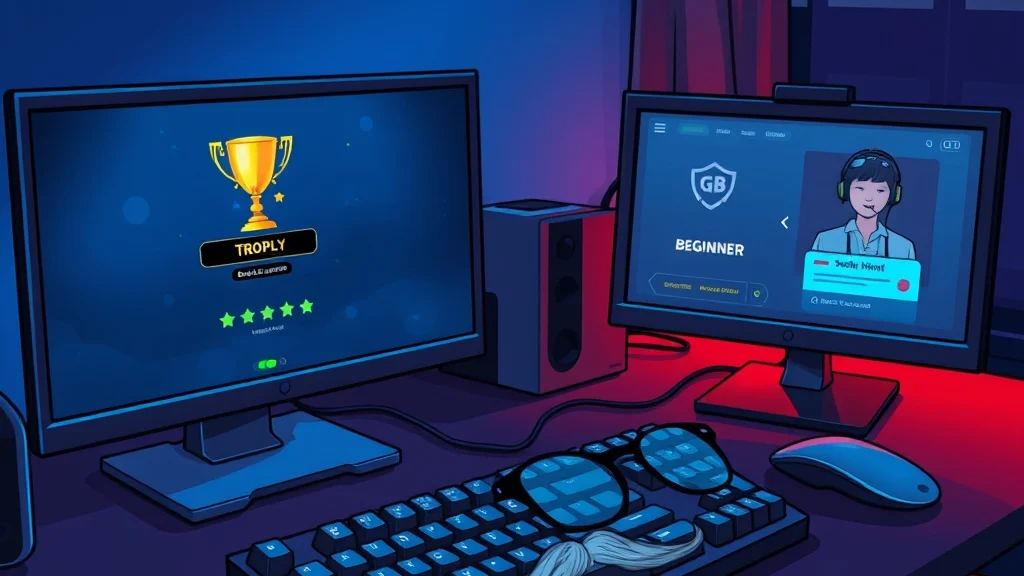
Smurfing works because matchmaking places a new account by its rank or hidden rating, not by the real skill of the person playing it. A brand-new account starts with a default rating that the system treats as an average or beginner player. Until the account wins enough games for the system to adjust, a skilled player keeps getting matched against weaker opponents.
Why players smurf
Players make smurf accounts for reasons that range from reasonable to pretty selfish:
- Playing with lower-ranked friends. A Diamond player can’t queue with a Bronze friend in many ranked modes, so they make a second account.
- Practicing new roles or characters. Learning a new champion or hero on a main account can tank its rank.
- Avoiding pressure. Some players just want games that feel lower-stakes.
- Streaming and content. “Unranked to Grandmaster” runs are a whole genre.
- Stomping beginners. The least defensible reason, and the one that gives smurfing its bad name.
Riot has acknowledged the gray area here. Riot clarified that players who create and manually level alt accounts for practicing different roles won’t be targeted unless they intentionally lose games to lower their rank.
How matchmaking catches up
Most modern systems use a hidden matchmaking rating that moves faster on new accounts. A long win streak pushes the rating up quickly, so a smurf climbs toward the owner’s real level. Riot said its TrueSkill 2 work would help here, noting the project will further reduce smurfing thanks to improved accuracy on matchmaking rating (MMR) detection.
A worked example
Say a Platinum Valorant player makes a new account. They have to grind to account level 20 before competitive unlocks, playing unrated matches against mostly newer players along the way. Their first ranked matches land in low lobbies, and they win most of them with lopsided scores.
Each win moves their hidden rating up by a large amount, so within a few dozen matches they’re facing Gold and Platinum opponents. The smurf lasted a while, but along the way, maybe 30 or 40 lobbies of genuine beginners had a miserable afternoon. That’s the real cost, and it’s why publishers care.
Pro tip: If you suspect a smurf, check the account level and match history after the game. A very low level paired with a near-perfect win rate is the classic pattern, but report it through the game’s official menu instead of calling it out in chat.
Smurfing examples from popular games
Smurfing shows up in nearly every competitive game, and each publisher fights it with different gates and policies. The table below covers the big ones. Requirements change with patches, so double-check the official support pages before you rely on a number.
| Game | Ranked unlock gate | Anti-smurf measures | Notes |
|---|---|---|---|
| League of Legends | Summoner level 30 | Vanguard anti-cheat, TrueSkill 2 matchmaking, smurf reports under rank manipulation | Crackdown began with patch 25.18 in September 2025 |
| Valorant | Account level 20 | Riot Vanguard, rank placement based on performance | Same publisher policies as League |
| Overwatch 2 | Quick Play wins required on new accounts 50 | SMS Protect phone verification on new accounts | Phone rule relaxed for older accounts at launch |
| Counter-Strike 2 | Prime Status required for Premier | Paid Prime Status, Trust Factor matchmaking | Free accounts are kept apart from Prime players |
| Dota 2 | Playtime requirement before ranked | Unique phone number tied to ranked play | Valve has run smurf ban waves in the past |
League of Legends
League is where the smurfing debate is loudest. Riot Games has announced a large-scale crackdown on smurfing, boosted accounts, and purchased accounts in League of Legends, which will begin with patch 25.18 on September 10 2025. In 2026, it went further: smurfing has been added to the “rank manipulation” category along with boosting and wintrading in the post-game report menu.
Overwatch 2
Blizzard went after smurfs at the account-creation level. Its phone-verification system meant a phone number cannot be linked to multiple accounts at once or used to create several different profiles. After a launch backlash, Blizzard dropped the rule for existing players, but “Accounts that were not connected to Battle.net, as well as new accounts, will still have to meet SMS Protect requirements.”
Counter-Strike 2 and Dota 2
Valve’s approach is to make fresh accounts cost something, either money (Prime Status in Counter-Strike 2) or a unique phone number and playtime (Dota 2). Neither stops smurfing completely. They just make it more expensive and slower, which cuts down the casual cases.
In shooters, smurfs are especially easy to spot. A smurf who reliably wins gunfights against new players is often beating them on reaction time and crosshair placement more than anything else, which is why it pays to understand What Does TTK Mean? when you’re judging whether you lost to a smurf or a fast weapon.
Smurfing vs boosting, alts and other related terms
Smurfing is related to boosting, alt accounts, throwing and account sharing, but each term describes something different. Players mix them up constantly, and publishers punish them differently.

| Term | Who plays | Whose account | Goal | Usually allowed? |
|---|---|---|---|---|
| Smurfing | Skilled player | Their own low account | Easier opponents | Gray area, varies by game |
| Alt account | Any player | Their own second account | Variety, practice, region | Usually yes |
| Boosting | Skilled player | Someone else’s account | Raise that account’s rank | No |
| Account sharing | Multiple people | One shared account | Convenience or boosting | No in most terms of service |
| Deranking or sandbagging | Any player | Their own account | Lose on purpose to drop rank | No |
| Throwing | Any player | Their own account | Lose a specific match on purpose | No |
| Wintrading | Two or more players | Their own accounts | Trade wins to climb | No |
Smurf vs alt
An alt is just a second account. It becomes a smurf only when it’s used to play opponents well below your skill. A Diamond player whose alt sits in Diamond isn’t smurfing.
Smurf vs boosting
Boosting means playing on someone else’s account to raise its rank, often for money. Riot also targets “hitchhiking,” which it groups with boosting as one of the two most common smurfing behaviors we see. In everyday slang, boosting and smurfing are separate things. In Riot’s policy language, they overlap.
Smurf vs deranking
Deranking, also called sandbagging, means losing on purpose to lower your rank. Plenty of smurfs got their low rank honestly, by making a new account. Deranking is the shady way to get the same result, and it’s the part most publishers treat as a clear violation.
Heads up: Losing on purpose to keep an account low hurts four teammates every single game. Even in games that tolerate alt accounts, intentional losing is treated as a violation.
How to use the term smurf correctly
Use “smurf” for a skilled player on an account ranked well below their real ability, and use “smurf account” for the account itself. It works as a noun (“that Jett is a smurf”), a verb (“he’s smurfing”) and an adjective (“a smurf account”). Keep it for real skill mismatches, not for every player who beats you.
Example sentences
- “Their Sova is level 22 with an 85 percent win rate. Definitely a smurf.”
- “I made a smurf account so I can queue with my cousin in Silver.”
- “He isn’t smurfing, he’s just good. His main is the same rank.”
Common mistakes players make
- Calling every good player a smurf. Some players are just having a great game, or they came over from a similar game.
- Mixing up smurfing and boosting. Playing your own low account is different from playing someone else’s.
- Assuming low level means new player. Accounts that haven’t been played in a while can come back with a hidden rating that no longer fits their current skill.
- Blaming lag on smurfs. Sometimes the “unbeatable” opponent is just running at a much higher refresh rate than you. If your game feels choppy, read What Is Frame Rate in Games? FPS Explained before you blame the other team.
- Accusing players in chat. It rarely helps and can get you reported. Use the official report option instead.
A quick decision rule
Before you call someone a smurf, check three things: account level, match history length and win rate. If all three point the same way, such as a low level, a short history and a very high win rate, the label probably fits. If only one does, it’s more likely a good player having a good day.
Pro tip: If you want to play with a lower-ranked friend, look for unranked, casual or custom modes before making a second account. You’ll get the same games together without wrecking strangers’ ranked matches.
We’ve all been the Bronze player who ran into a Diamond in disguise. Nobody enjoys it. Knowing what to call it, and when not to, makes post-game chat a little calmer.
FAQ
Is smurfing against the rules?
It depends on the game. Many publishers allow personal alternate accounts but ban account selling, account sharing and boosting. Deliberately losing to lower your rank is widely treated as a violation.
How can you tell if someone is a smurf?
Common signs are a low account level paired with high-level mechanics, a short match history with a very high win rate, and unlocked cosmetics or knowledge that new players rarely have. None of these signs is proof on its own.
What is the difference between a smurf and an alt?
An alt is any secondary account. It only becomes a smurf when it’s used to play against opponents below the owner’s real skill level.
Why do games require phone numbers to play ranked?
Linking one phone number to one account makes it harder to create disposable accounts. Blizzard used SMS Protect in Overwatch 2 partly to discourage smurfing and to stop banned players from coming back.
Does smurfing hurt the smurf’s own matchmaking?
Only briefly. Hidden matchmaking ratings rise quickly after a long win streak, so a smurf account usually climbs toward its owner’s real skill level within a few dozen matches.
Is it smurfing to play on a friend’s low-ranked account?
In everyday slang, people call it smurfing. Publishers usually call it account sharing or boosting, and it’s banned in most competitive games.
Sources