
Key facts
- NHL 27 Be a Pro starts your created Pro in the World Juniors Medal Round, then moves on to the NHL Draft and a fight for a roster spot.
- Your draft stock comes from how you play and the choices you make before the draft.
- Form Score, Energy, Skill Trees and conversations are the main systems that decide how your Pro develops.
- Press conference answers affect your Brand, your standing with management and how teammates see you.
- Since NHL 26, playing poorly can get your Pro sent down to the AHL.
The best NHL Be a Pro tips come down to one rule: play your position, not the puck. In NHL 27, your draft stock, Form Score and standing with management all reward a player who does their job, and they punish the one who chases every loose puck like it owes him money. Here’s how the mode works, what to set up, and how to get from prospect to the first line without a detour to the minors.
How does NHL Be a Pro work?
NHL Be a Pro is a single-player career mode where you control one created player across a full hockey career. EA describes it as a mode where you create your own hockey player, called your Pro, and guide them through their career, from prospect to NHL star. Along the way you take on challenges, make choices in conversations, develop your Pro, and work towards career milestones.
The career path in NHL 27
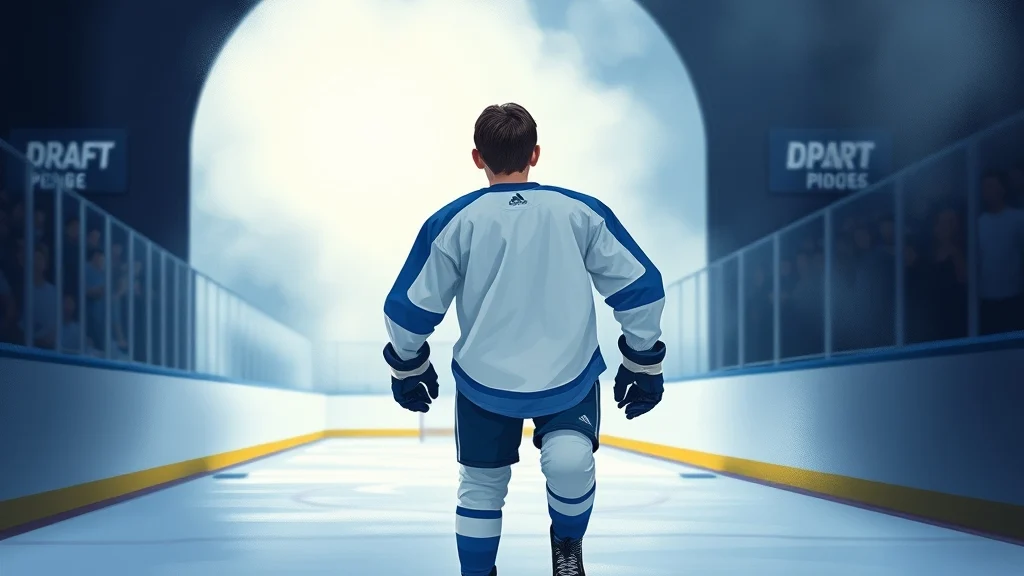
NHL 27 drops you in before the draft. According to EA’s guide, you’ll create your Pro and start your career in the World Juniors Medal Round. From there you build your draft stock through your performance and choices, enter the NHL Draft, and compete for an NHL roster spot. The same guide’s FAQ also lists a Memorial Cup: compete in the Memorial Cup before entering the NHL Draft.
This structure came from the NHL 26 rebuild. EA said NHL 26 brought in a new chapter-based core structure that completely redefines the pace, flow, and stakes of Be A Pro. NHL 27 keeps that skeleton. One review put it bluntly: there aren’t any major changes to the mode this year, aside from the new gameplay elements, stadiums and rosters.
The systems that run your career
You’ll deal with four systems the whole way through. EA’s progression guide tells you to manage your Form Score, Energy, Skill Trees, and conversations to improve your Pro and unlock new opportunities on and off the ice.
| System | What it does | Where you check it |
|---|---|---|
| Form Score | Tracks your recent on-ice performance | Be a Pro Hub |
| Coach Feedback | Tells you what the staff wants from you | Be a Pro Hub |
| Energy | Limits how hard you can push development before you need recovery | Be a Pro Hub |
| Attributes | Your Pro’s ratings, which grow as you play | Player development screens |
| Skill Trees and Traits | Unlock specialized perks for your build | Development menus |
| X Factor abilities | Upgradable signature skills | Development menus |
| Conversations and press | Shape Brand, management and teammate relationships | Cutscenes and media scrums |
What changed in the stakes
Older versions of the mode let you coast. That’s gone. When NHL 26 launched, EA confirmed that for the first year in a while, poor performance will see your player demoted to the AHL. EA’s NHL 26 feature page sells the same arc, from the highs of being a human highlight reel to the lows of working your way back to the pros from the minors. In other words, a bad stretch costs you something now, which is exactly why the tips below matter.
What do you need before you start Be a Pro?
You need a copy of NHL 27, a clear idea of the player you want to be, and about ten minutes in the settings menu before your first shift. The career starts quickly, so the decisions that shape your first season come before you ever see the World Juniors.
Getting into the mode
The menu path is simple. EA’s instructions start with: From the main menu, choose Be A Pro Career. Then, under Player, customize your Pro’s appearance and equipment, then save your changes. Your appearance and gear don’t change how you play, so don’t burn twenty minutes picking tape colors before you’ve decided on a build.
Decide your identity first
Before you touch a slider, answer three questions:
- Which position will you actually enjoy for 82 games? Center means faceoffs and full-ice coverage. Wing means a simpler job and more shooting chances. Defense means patience.
- Do you score, set up, or grind? Your answer decides your build and which Skill Tree Traits you’ll chase.
- What kind of public persona do you want? Press conference choices add up, so pick a direction before the World Juniors media scrum, not during it.
Players have been shaping that identity since NHL 26. The rebuild let you shape their character’s personality and playstyle, choosing which abilities and X-Factors they use and a whole lot more.
Platforms and controls
NHL 26 shipped on PlayStation 5 and Xbox Series X and S, and Be a Pro works the same way on both. There’s no platform-exclusive Be a Pro content to plan around. The only real difference is the button names. On offense, you’ll lean on the right stick for shooting and stickhandling. Without the puck, R1 on PlayStation or RB on Xbox calls for a pass. Learn that button early, because a winger who never calls for the puck becomes a very expensive pylon.
Heads up: EA’s FAQ covers whether Custom Rosters work in Be a Pro. Check it before you load a modded roster file, so you don’t build a whole career on a roster the mode won’t use.
Time commitment
Be honest about how much time you have. A full career with 20-minute periods is a big commitment. That’s not a reason to avoid it, but it is a reason to choose your period length on purpose rather than leaving it on whatever the default happens to be.
Which setup choices matter at the start?
The settings that matter most are difficulty, period length, the Simming Penalty and your camera. Appearance and equipment can wait. These settings shape every game you play, and changing them halfway through a season makes it hard to judge whether your Pro is really improving.

The settings table
The Be a Pro settings screen includes options labeled Be A Pro Simming Penalty, Draft Pick Ownership and Offline Be A Pro Camera. You’ll also find difficulty, period length, injuries and NHL rule toggles.
| Setting | Options to consider | What it changes | My pick for a first career |
|---|---|---|---|
| Difficulty | Rookie through Superstar | How smart the AI is, and how much your stats mean | Pro, then All-Star once you’re comfortable |
| Period length | Short to full 20 minutes | Stat volume per game and time per game | 8 to 10 minutes |
| Simming Penalty | On or Off | Whether simmed games cost you progression | On, if you want the career to mean something |
| Draft Pick Ownership | Authentic or other | Which teams hold which picks | Authentic |
| Be a Pro Camera | Several angles, including High | How much of the ice you see | High |
| Injuries | On or Off | Whether your Pro can miss time | On after year one |
| Rules (icing, offsides) | Hybrid, delayed and similar | How true to life the flow is | Hybrid icing, delayed offsides |
Difficulty is a stat-quality choice
Difficulty doesn’t only decide how hard games are. It also decides how believable your numbers look. A 140-point rookie year on Rookie difficulty feels great for about a week, then it starts to feel like a video game in the worst way. All-Star is a good long-term home for most players who already know the controls.
Period length and your Form Score
Shorter periods mean fewer touches, so each mistake weighs more on a game’s grade. Longer periods give you more room to recover from a bad shift but take far more time. My take: 8 to 10 minutes is the sweet spot for a first career. You get enough shifts to settle in, and you’ll still finish a season before the real Sabres finish theirs.
Pro tip: Lock your settings before the World Juniors and leave them alone for at least a full NHL season. If you change difficulty in the middle of a slump, you’ll never know whether you got better or the game just got easier.
Camera choice
The default broadcast-style angle looks great in replays and is miserable for reading the play. A higher camera shows more of the ice, which matters because the mode grades your positioning. If you can’t see the weak-side defenseman, you can’t cover him.
What strategies win in NHL Be a Pro, step by step?
The winning strategy is to play your role first, chase stats second and manage your Pro off the ice as carefully as on it. Every system in the mode, from draft stock to Coach Feedback, rewards discipline more than flash.
Step by step from the first shift
- Play your assigned role. The mode allows you to only play the role you are assigned, like a real player. If you’re a winger, you are not winning face-offs, you are benefitted from them if your Center wins them.
- Follow the positioning markers. The game will also target where you should be, and who you should be guarding. Treat those markers like a coach yelling from the bench, because that’s basically what they are.
- Check the Hub after every game. EA’s progression guide says to use the Form Score and Coach Feedback from the Be a Pro Hub to check how your Pro is performing.
- Work through your challenges. You can track your active challenges from the Be a Pro Hub. Challenges are the most direct way to show the staff what they want to see.
- Spend points with a plan. You’ll improve your Pro by managing their Energy and recovery, developing their Attributes, unlocking Traits in Skill Trees, and upgrading X Factor abilities.
- Respect your Energy bar. EA’s own advice is to balance development with recovery as your career progresses.
- Treat press conferences like part of the game. Your answers can earn experience towards your team or your brand.
Playing your position well
Most bad Be a Pro grades come from being in the wrong place, not from missed shots. As a winger, hold your lane on the breakout and give your defenseman a passing option along the boards. As a center, stay low in your own zone. You’re the third defenseman whether you like it or not. As a defenseman, don’t pinch unless the puck is clearly on your side of the ice.
Picking a press direction
In the early media sessions, you make choices on your future as either being Influential, Confident, or a Leader. Those choices will affect things like your Brand or Management Likeability, or how your team sees you.
| Press direction | Leans toward | Best fit |
|---|---|---|
| Influential | Brand and public profile | Scorers who want the spotlight |
| Confident | A mix of brand and on-ice swagger | Skill players who back it up |
| Leader | Teammates and management | Two-way centers and defensemen |
There are fewer conversations than there used to be, and they carry more weight. Coverage of the NHL 26 reveal noted that each one has more consequences on your relationship with your brand, teammates, or management. Pick a lane and stay in it. Flip-flopping between personas spreads your gains so thin that nothing really improves.
Pro tip: If you’re on the bubble for a roster spot, lean toward management-friendly answers until you’ve locked down a regular role. The brand can wait until you’re sure you’ll be in the lineup.
What does a full Be a Pro run look like from start to finish?
Here’s a realistic first season from start to finish: one Pro, one plan, and one very Buffalo goal. The point isn’t exact numbers. It’s to show how the systems connect from game to game.
The setup
Say we create a two-way center from Western New York. The goal is simple: hear our name called by the Sabres and someday give that building a playoff run it doesn’t have to wait a decade for. Settings: All-Star difficulty, 9-minute periods, Simming Penalty on, High camera, Authentic draft pick ownership. Press direction: Leader, because a two-way center lives and dies on the coaching staff’s trust.
Chapter one, the World Juniors
The Medal Round is our audition. Instead of hunting goals, we win draws, get back on defense and hit the soft spot in the slot when our wingers have the puck. Early on, one sloppy shift where we chase a puck carrier into the corner leaves the slot open, and the opponent scores. That’s the kind of moment Coach Feedback points out, so we clean it up for the rest of the tournament.
The press scrum comes next. We take the Leader answers: credit the line, credit the coach, no trash talk. It’s boring in the media and great with management.
Chapter two, the draft
EA’s NHL 26 deep dive made the point that the mode does not give you a static, guaranteed path. Where we land depends on the stock we built. With Draft Pick Ownership set to Authentic, the Sabres pick where they really pick, so whether they can grab us depends on our stock and their slot. If another club takes us, that’s fine. We play out the career and dream about free agency.
Chapter three, the rookie camp and first stretch
Now the real work starts. After every game we open the Be a Pro Hub, read the Form Score, read the Coach Feedback, and check the challenge list. When our Energy dips after a heavy training block, we take the recovery option instead of grinding another session. Skill Tree points go into Traits that fit a two-way center: faceoffs, defensive positioning and passing, not slap shot power we’ll never use from the dot.
The slump and the response
Around midseason, three straight games of chasing the puck drag our Form Score down. This is where NHL 26 and NHL 27 differ from the old days: keep that up and the AHL is a real possibility. So we go back to basics. We stay low, take the safe exit pass and shoot only from the slot. The grades recover, and so does our standing with the staff.
What the example teaches
The season didn’t turn on a highlight-reel goal. It turned on reading the Hub, protecting Energy and sticking with the Leader persona when the brand-building answers looked tempting. That’s the loop for every season after this one.
What advanced tactics and edge cases should you know?
The advanced tactics are about edges: when to sim, when to change roles, how far to push your brand and how to handle a demotion without wrecking a save. These matter most from year two on, once the basic loop is second nature.
Simming without losing your season
Simming saves time, but the Simming Penalty setting exists for a reason. If it’s on, plan on playing the games that matter, like rivalry games, playoff pushes and anything tied to an active challenge. Use sims for dead stretches only.
| Situation | Play or sim | Why |
|---|---|---|
| Active challenge on the Hub | Play | Challenges usually need you on the ice |
| Form Score trending down | Play | You can’t fix a slump from the sim screen |
| Roster spot in doubt | Play | Management judges what you do |
| Locked-in top-line role, midseason lull | Sim, if you accept the penalty | Lowest risk |
| Late-season playoff race | Play | Highest stakes |
Handling an AHL demotion
A demotion isn’t the end of your save. Treat the AHL like a rehab assignment. Rebuild your Form Score against easier competition, finish the challenges the coaches give you, and keep your press answers humble. Don’t quit and restart out of frustration. The way back up is one of the better stories this mode can tell, and EA built it that way on purpose.
The brand versus the room
A big brand is fun, but the room matters more when your ice time depends on the coach. Here’s a decision rule I use: if you’re not a lock for the top six, favor team and management answers. Once you’re entrenched on the first line, you can afford Influential answers.
Heads up: Created Pros can follow you outside the mode. If you plan to take your player into World of Chel events, think about how your Be a Pro build will play in online games before you commit Skill Tree points.
Getting the most from X Factors
Don’t spread your X Factor upgrades across three abilities. Pick the one that matches your main job and level it up first. A center who wins draws and moves the puck gets more from one fully upgraded passing or faceoff ability than from three half-finished ones.
For the team-building side of the game, our nhl franchise mode tips cover cap management and roster moves. That helps if you ever want to understand why your GM is shopping your linemate at the deadline.
Switching positions mid-career
It can be tempting to switch positions after a slow start. Resist it unless the Coach Feedback keeps flagging the same problem for weeks. Your Traits and Attributes were built for one job, and a position change throws much of that investment away.
What are the most common Be a Pro mistakes to avoid?
The most common Be a Pro mistake is chasing the puck instead of playing your position. Nearly every bad grade, lost roster spot and surprise demotion traces back to that one habit. The rest of this list covers mistakes that sneak up on even veteran players.
The big seven
- Puck chasing. We’ve all done it, and it’s the fastest way to sink your Form Score. Follow the positioning markers the game gives you.
- Ignoring the Hub. If you don’t read Coach Feedback, you’re guessing about what the staff wants. Check it after every game.
- Burning out your Energy. Training every possible session feels productive until your performance drops. Recovery is part of development.
- Persona whiplash. Switching between Influential, Confident and Leader every press conference means none of your relationships really grows.
- Spreading Skill Tree points everywhere. Fifteen half-built Traits are worse than five finished ones that match your build.
- Simming through a slump. You can’t fix your form from the sim screen, and the Simming Penalty can make things worse.
- Changing difficulty midseason. It hides whether you’re improving and makes your stats impossible to compare across seasons.
Smaller ones that still cost you
Taking bad penalties is a quiet career killer. Two minutes in the box is two minutes of no Form Score growth and a power play against your team. Forcing shots from the point as a forward is another. Shoot from the slot, or pass.
Some players also skip the cutscenes. The presentation is a matter of taste, and one review said the mode leans hard into the new broadcast visuals, player focus wipes, and updated camera work and a bigger emphasis on crowds. Skip the cinematics if you like, but read the dialogue choices carefully, because those choices stick with your career.
Pro tip: Before you put any Skill Tree point into a Trait, ask whether it helps the job the Coach Feedback keeps asking you to do. If it doesn’t, save the point.
Expectation check
Be a Pro isn’t perfect. Even during the NHL 26 reveal, some critics argued the overhaul leaned on presentation more than depth. NHL 27’s changes are mostly additions rather than a rebuild, so don’t expect a brand-new mode if you played last year’s. Still, the stakes are real now, and that alone makes it worth playing the right way.
For the rest of our hockey coverage, from Franchise to Be a Pro, start with our ea sports nhl guide hub.
FAQ
Where does NHL 27 Be a Pro start?
EA’s guide says your career starts in the World Juniors Medal Round. The same guide’s FAQ also lists the Memorial Cup as a stop before the NHL Draft.
Can you get sent down to the AHL in Be a Pro?
Yes. Starting with NHL 26, poor play can get your Pro demoted to the AHL. You earn your way back up by playing well and following coach feedback.
What is Form Score in NHL Be a Pro?
Form Score tracks your recent performance. You can check it on the Be a Pro Hub along with Coach Feedback, and it’s the quickest way to tell whether your play is helping or hurting your career.
Do press conference answers matter in Be a Pro?
Yes. Your answers can affect your Brand, how much management likes you and how your team sees you, so it pays to pick a direction early and stick with it.
What is the best position for Be a Pro?
Center is the busiest role because you take faceoffs and cover the most ice. Wingers get a simpler job, and defensemen need the most positional patience, so center is the best choice if you want the most involvement.
How do I improve my Pro’s attributes faster?
Play well for Form Score, complete the challenges shown on the Be a Pro Hub, and spend Skill Tree points on Traits that fit your build. Balance training with recovery so Energy doesn’t fall too low.
Should I sim games in Be a Pro?
Only if you’re okay with the cost. Be a Pro has a Simming Penalty setting, so check it under the mode settings before you sim through a stretch of the schedule.
Sources