
Key facts
- NFL Blitz debuted in arcades in November 1997, made by Midway with NBA Jam veterans Mark Turmell and Sal DiVita.
- The original was seven-on-seven, required 30 yards for a first down, and ignored penalties like pass interference.
- Midway released a Blitz every year from 1997 to 2003, then lost the NFL license when EA signed its exclusive deal.
- Blitz: The League (2005) and Blitz: The League II (2008) carried on without NFL teams.
- EA Sports relaunched NFL Blitz on PSN and Xbox Live Arcade in January 2012, minus the late hits.
NFL Blitz started as an arcade game in 1997. The series ran yearly under Midway through 2003, carried on without the NFL license as Blitz: The League, and came back under EA Sports in 2012. Here’s every game in order, the fight over late hits that shaped the whole series, and why seven-on-seven chaos still outlives a lot of “realistic” football games.
NFL Blitz games timeline from 1997 to 2022
The NFL Blitz games run from the original 1997 arcade cabinet to a 2012 EA Sports reboot, with a 2022 home cabinet re-release closing the list. Beginning in 1997, Midway released a new entry in the series each year, so the late 90s and early 2000s are packed. After that, things get thin.
| Year | Release | Platforms | Why it matters |
|---|---|---|---|
| 1990 | High Impact Football (Williams) | Arcade | Mark Turmell’s earlier arcade football game |
| Nov 1997 | NFL Blitz | Arcade | The original: seven-on-seven, no penalties |
| Sep 1998 | NFL Blitz home ports | N64, PlayStation, Windows, Game Boy Color | Blitz comes home |
| 1998 | NFL Blitz ’99 | Arcade | The NFL’s first late hit warning |
| 1999 | NFL Blitz 2000 Gold Edition | Arcade | Final arcade release |
| 1999 | NFL Blitz 2000 | N64, PlayStation, Dreamcast, GBC, PC | The home version that peaked on dorm room TVs |
| 2000 | NFL Blitz 2001 | N64, PlayStation, Dreamcast, GBC, PC | Last edition on that console generation |
| 2001 | NFL Blitz 20-02 | PS2, Xbox, GameCube | First on sixth-gen consoles |
| 2002 | NFL Blitz 20-03 | PS2, Xbox, GameCube, GBA | Moves to eight-on-eight |
| Oct 2003 | NFL Blitz Pro | PS2, Xbox, GameCube | Full 11-on-11, more of a sim |
| 2004 | No Blitz release | None | The streak ends; EA signs its exclusive NFL deal in December |
| 2005 | Blitz: The League | PS2, Xbox (Xbox 360 in 2006) | No NFL license, the attitude gets turned up |
| 2008 | Blitz: The League II | Xbox 360, PS3 | Midway’s last Blitz |
| 2009 | Midway liquidated, EA gets the IP | None | The brand changes hands |
| Jan 2012 | NFL Blitz | PSN, Xbox Live Arcade | EA reboot without late hits |
| 2022 | Arcade1Up re-release | Home arcade cabinet | First three arcade versions return |
The dates for the first game are well documented. The arcade version hit North America in November 1997, Nintendo 64 and PlayStation on September 12, 1998, Windows in October 1998, and Game Boy Color in December 1998. The 2012 reboot launched on PSN on January 3, 2012, and on Xbox Live Arcade on January 4, 2012.
Reading the timeline
The timeline splits into four eras, and each one plays differently. The arcade era (1997 to 1999) is the pure version. The sixth-generation era (2001 to 2003) slowly adds players and rules. The unlicensed era (2005 to 2008) drops real teams and leans into attitude. The EA era (2012) brings back the arcade formula, minus the most famous part.
Pro tip: If someone says “Blitz” and means the late hit, body slam chaos, they almost always mean the 1997 to 2000 games. Keep that in mind before you buy anything secondhand.
How did NFL Blitz begin?
NFL Blitz began as Midway’s attempt to do for football what NBA Jam had done for basketball. The development team was headed by Mark Turmell and Sal Divita, who were known for being behind NBA Jam, and NFL Blitz was a deliberate attempt to translate the exaggerated arcade-style approach of NBA Jam to the football realm. Exaggerated is putting it mildly.
Turmell had worked on football before. His credits include High Impact Football, a 1990 arcade game from Williams Electronics, which makes Blitz less of a lucky swing and more of a second try with better tech. The original cabinet ran on Midway Seattle Hardware, and by 1997 polygon graphics were standard in arcades. Three-dimensional arcade games were nothing new by 1997, when Blitz released, and they were proliferating the market at a rapid pace. Blitz needed a hook, and it found one.
The rules that made Blitz Blitz
The hook was throwing out most of the rulebook. The game is seven-on-seven and has no-holds-barred gameplay, where there are no penalties or rules in the game. Unlike the NFL, pass interference is allowed, as are late hits, showboating and excessive celebrations. First downs needed 30 yards instead of 10, which turned every drive into a deep ball contest.
| Rule | Real NFL | NFL Blitz (1997) |
|---|---|---|
| Players per side | 11 | 7 |
| Yards for a first down | 10 | 30 |
| Pass interference | Penalized | Allowed |
| Late hits | Penalized | Allowed, and celebrated |
| Teams in the league | 30 in 1997 | All 30 |
The single-player goal was simple. Your main objective is to defeat all 30 (at the time) NFL teams to win the Super Bowl.
The league almost said no
The NFL license nearly fell apart before launch. Upon watching a preview scrimmage by Turmell and DiVita, league representatives said they could not have the NFL associated with the game as it was then programmed. Midway was eager to keep the NFL’s endorsement of the game, so they compromised on some of the graphic violence and “late hits” in the game. The compromise held, and after cabinets were released in the fall of 1997, it became another smash arcade hit for Midway.
For Bills fans, the timing is funny in a painful way. Blitz hit arcades during Marv Levy’s final season, the first year after Jim Kelly retired. We were watching a 6-10 team on Sundays and pumping quarters into a machine where a linebacker could suplex the quarterback after the whistle. You can guess which one was more fun. For the bigger picture of how football games got to this point, our history of the first football video game through Tecmo Bowl and Madden fills in what came before.
What firsts and milestones did NFL Blitz set?
NFL Blitz’s biggest milestone was proving that a fully licensed NFL game could sell on spectacle instead of simulation. Within three years it went from one arcade cabinet to nearly every console and handheld on the market.
Arcade milestones
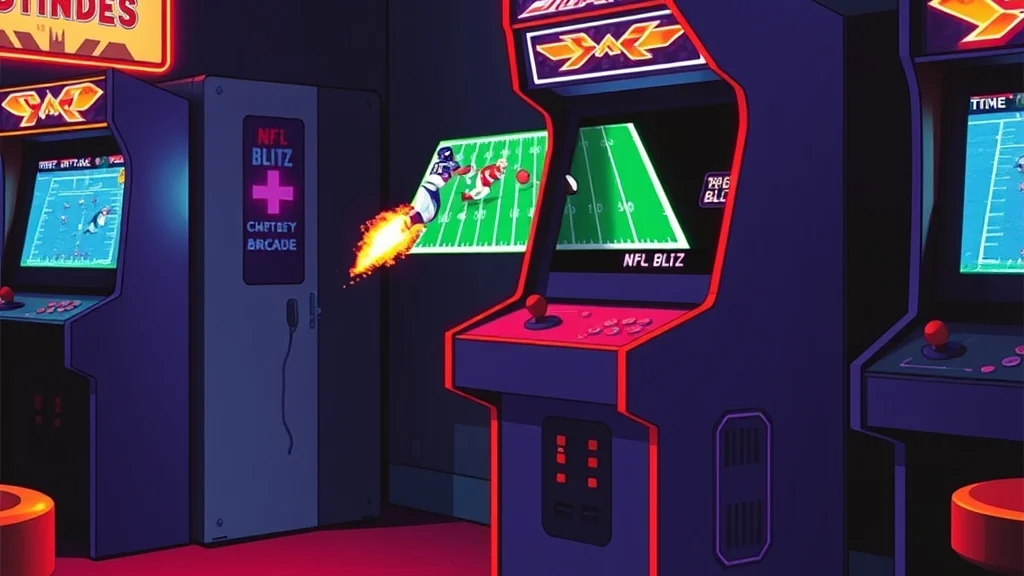
Midway put out a new cabinet every year of the arcade run. NFL Blitz 2000 Gold Edition became the final arcade release, the third consecutive year with a new cabinet. Midway also tried a combo cabinet: NBA Showtime was also featured in a dual game cabinet along with NFL Blitz 2000 that Midway dubbed the “SportStation.” Two sports games in one cabinet sounds obvious now, but it was a sharp business move with arcades already shrinking.
Home console milestones
- 1998, the jump home. The first game came to Nintendo 64, PlayStation, Windows and Game Boy Color within about three months of each other.
- 1999, Dreamcast. NFL Blitz 2000 put the series on Sega’s new console, one of the better showcases for arcade ports at the time.
- 2001, the sixth generation. NFL Blitz 20-02 launched on PS2, Xbox and GameCube.
- 2002, bigger rosters. 2002 saw an increase to eight players and NFL Blitz Pro (released in 2003) increased to the full eleven.
- 2012, digital only. The EA reboot came out only as a download, on PSN and Xbox Live Arcade.
The voice of the series
Commentator Tim Kitzrow is as much a part of Blitz as the 30-yard first down. He came back for the reboot, sharing commentary duties on the EA Sports Blitz with longtime friend and fellow comedian Brian Haley. If you can hear his calls in your head right now, you’re not alone.
Hidden characters and secret codes
Blitz also made cheat codes a social event. On the matchup screen you tapped the Turbo, Jump and Pass buttons a set number of times, then pushed a direction, to unlock big heads, weather changes and secret players. Nobody had the full list, so every arcade had a kid who swore he knew a code. The reboot kept the tradition alive with wild tackles, goofy hidden characters, and entire teams catching on fire.
Heads up: Code inputs changed between editions and platforms. A code that worked on the N64 version of Blitz 2000 won’t always work on the arcade cabinet or a later sequel.
Which NFL Blitz games are the most notable?
The most notable NFL Blitz games are the 1997 original, Blitz ’99, Blitz 2000 Gold Edition, NFL Blitz Pro, Blitz: The League and the 2012 reboot. Each one marks a turn in the series. Here’s what made each one stand out.
NFL Blitz ’99 and the late hit message
Blitz ’99 is where the late hit fight started. By this point, the NFL had really gotten squeamish about the game’s violence, particularly the late hits. The league told Turmell that Midway could still put out Blitz 99, but late hits had to go. Midway’s answer was cheeky. “The game basically continued to allow late hits, and we put a little message up that said, ‘Late hits activated,'” Turmell said. You can probably guess how the league felt about that.
NFL Blitz 2000 and Gold Edition
NFL Blitz 2000 is the peak for most of us. It came out on more home platforms than any other Blitz, including Dreamcast and Game Boy Color, and Gold Edition was the last and most refined arcade version. It’s also the edition most fans have in mind when they argue about Blitz.
NFL Blitz Pro, the misstep
NFL Blitz Pro went the other direction. It moved to 11-on-11 football with more realistic rules and play, and fans who wanted chaos stayed away. After the commercial failure of the more simulation-oriented Blitz Pro, Midway did not release a Blitz in 2004 for the first time since the series began. That’s the risk of turning an arcade game into a sim: you end up with a worse Madden.
Blitz: The League and The League II
Once the license was gone, Midway made Blitz meaner. Midway brought back the original Blitz style play with 2005’s Blitz: The League, built around fictional teams, a story mode and the kind of injuries and off-field drama the NFL would never put its logo on. Blitz: The League II followed in 2008 on Xbox 360 and PS3.
NFL Blitz (2012), the EA reboot
EA Sports announced NFL Blitz’ return on October 19, 2011, via a story with Electronic Gaming Monthly and the release of an announcement trailer. It kept the core rules, as two-minute quarters and a 30-yard first down requirement keep each game moving at a rapid and chaotic pace. It also added a new single-player mode: Blitz Gauntlet, a Mortal Kombat-esque ladder populated with normal NFL teams and intermittent boss team battles.
Worked example: a Blitz drive, Bills edition
Say you pick the Bills in any classic Blitz and start on your own 20. It’s 1st-and-30, so you need to reach the 50 for a fresh set of downs. An 8-yard run leaves 2nd-and-22, which is a bad spot because Blitz defenses sit back and wait. Throw the deep ball on first down and you’ve got two chances to fix it if it falls incomplete.
| Situation | Smart call | Why |
|---|---|---|
| 1st-and-30 | Deep pass | You have three downs to recover if it fails |
| 2nd-and-15 or less | Crossing route with Turbo | Yards after the catch can finish the job |
| 3rd-and-20 or more | Deep shot | Short gains still leave you punting |
| 4th-and-anything near midfield | Go for it | Field position matters less when touchdowns come fast |
We’ve all lost a game in the final seconds by punting on 4th-and-12 near midfield. Blitz punishes caution.
Why did the NFL make Blitz tone it down?
The NFL made Midway, and later EA, tone down Blitz because the league didn’t want its brand tied to late hits and on-screen violence. That pressure started in 1998 and never went away. The NFL made Midway tame most of the more violent or insane aspects of the game as the license progressed.
Turning point one: losing the license
The biggest turning point had nothing to do with gameplay. In December 2004, EA signed an exclusive deal for NFL video game rights, and every other publisher lost access to NFL teams and players. Midway had already skipped 2004 after Blitz Pro flopped, so the deal ended any hope of a licensed comeback. The same exclusivity shaped college football games too, and our ncaa football video game history covers how EA’s licensing strategy played out on the college side.
Turning point two: Midway’s collapse
Midway didn’t survive the decade. After the liquidation of Midway Games in 2009, EA Sports acquired the NFL Blitz intellectual property. The company that made Madden now owned the game that used to be Madden’s rowdy alternative.
Turning point three: the 2012 late hit removal
The reboot is where the late hit fight finally ended, and the NFL won. EA Tiburon worked in relation with the NFL. While the league was supportive of many gameplay elements, they did request that late hits be removed. Reviews at the time said the signature late hits of the Blitz of yesteryear have been cut due to input from the NFL and their stance on player health and safety. That was 2012, right as concussions were becoming the league’s biggest public problem, so the timing explains a lot.
The people who made the game weren’t thrilled. Turmell had moved on before launch; he left less than two months before Blitz released in January 2012. He said the NFL reviewed the game and pulled late hits, which left him feeling “a little disappointed” in the finished product. Kitzrow was blunter: “Unfortunately, the NFL was right in our face about all the late hits, the violence, the concussions”.
My take on it
Let’s look at both sides. The NFL has a real interest in not glamorizing hits after the whistle, especially with a league full of players dealing with brain injuries. But Blitz never pretended to be real football, and it says something that a 1998 on-screen message did more to keep the series’ identity than any feature EA added in 2012. My view: the league had the right to ask, and the game was worse for it. Both of those things are true.
Why does NFL Blitz still matter?
NFL Blitz still matters because it’s the clearest proof that football games don’t need to be simulations to be great. A two-minute quarter on a couch with a friend beats a three-hour franchise session for plenty of people, and Blitz built a whole series on that idea.
It shaped the arcade sports formula
Midway took the formula to other sports, with NHL Hitz and MLB Slugfest using the same exaggerated, short-session design. Later arcade football games like Saber Interactive’s Wild Card Football in 2023 clearly owe something to Blitz too. If you’re looking for that feel today, our guide to football games like madden lists the alternatives worth your time. Blitz also sits next to Tecmo Bowl as one of the touchstones in our wider Gaming History coverage, from football games to GTA.
It still has a home, sort of
Arcade1Up brought the cabinet back, but with a catch. Late hits and some tackles were also removed in the Arcade1Up re-release of the first two games (and NFL Blitz 2000 Gold Edition), which was released in 2022. The 2012 reboot has also gotten harder to find, since the 2012 version is no longer available on PS3.
Common mistakes when going back to Blitz
- Buying Blitz Pro by mistake. The cover looks like any other Blitz, but it plays like a different game.
- Expecting NFL teams in Blitz: The League. Both League games use fictional teams.
- Assuming the 2012 game or the Arcade1Up cabinet has late hits. Neither one does.
- Ignoring platform differences. Game Boy Color versions are stripped down compared to the console and arcade versions.
- Playing Blitz like Madden. Running for short gains on 1st-and-30 is how you lose.
Which version should you play?
| What you want | Best pick |
|---|---|
| Pure, unfiltered classic Blitz | Original hardware with NFL Blitz 2000 or Blitz ’99 |
| A real cabinet in your basement | Arcade1Up (no late hits) |
| Modern HD with real NFL teams | NFL Blitz (2012), if you can still find it |
| Story mode and attitude | Blitz: The League |
| 11-on-11 realism | Skip Blitz entirely and play a sim |
Pro tip: Before you pay collector prices for a used copy, check whether the cartridge or disc matches your system’s region. Blitz was released in several regions, and the wrong one won’t run on your console.
The rule of thumb is simple: the closer a Blitz is to 1999, the more it plays like the game you remember. Quarters, couch co-op, Kitzrow yelling over a body slam after the whistle. The modern versions got the graphics right, but not much else.
FAQ
What was the first NFL Blitz game?
The first was NFL Blitz, an arcade game Midway released in November 1997. Home versions followed in 1998 on Nintendo 64, PlayStation, Windows PC and Game Boy Color.
Which NFL Blitz game is considered the best?
Most fans point to the 1998 and 1999 era, meaning Blitz ’99 and NFL Blitz 2000, with Blitz 2000 Gold Edition as the final and most polished arcade version. That’s a fan consensus, not an official ranking.
Why did NFL Blitz stop being made?
The simulation-leaning NFL Blitz Pro sold poorly in 2003, Midway skipped 2004, and EA’s exclusive NFL license ended any chance of an officially licensed Midway sequel. Midway went into liquidation in 2009.
Does the 2012 NFL Blitz have late hits?
No. EA Sports removed late hits at the NFL’s request because of the league’s stance on player health and safety.
Is Blitz: The League an NFL game?
No. Blitz: The League (2005) and Blitz: The League II (2008) use fictional teams because Midway no longer had the NFL license.
Can you still play NFL Blitz today?
Yes, though options are limited. Arcade1Up released a home cabinet with the first two arcade games and Blitz 2000 Gold Edition, but late hits were removed from that version too. Original discs and cartridges are the other legal route.
Sources


1 comment