
Key facts
- Most people credit the first football video game to the Magnavox Odyssey in 1972, and arcade football took off with Atari Football in 1978.
- Tecmo Bowl (1987 arcade, 1989 NES) and John Madden Football (1988) set the two paths the genre still follows: arcade fun and simulation.
- EA’s exclusive NFL license in December 2004 ended ESPN NFL 2K5 and made Madden the only licensed NFL simulation.
- College football games stopped after NCAA Football 14 in 2013 and came back with EA Sports College Football 25 in July 2024.
- Madden NFL 27 launched August 13, 2026 with Caleb Williams on the cover, and it’s the 37th game in the series.
Football video games have been around for more than five decades. They started as glowing dots on a Magnavox Odyssey in 1972 and turned into the Madden and College Football games we lose sleep over every August. Below you’ll find a dated timeline first, then the milestones, the scandals and the reasons it all still matters. Here’s what we’re working with.
Football video game timeline from 1972 to 2026
The history of football video games covers about 54 years, from 1972 to 2026. The table lists the release years that actually changed how we play. Where a game came out in arcades first and on home consoles later, both years are listed, because that gap explains a lot of the arguments about “firsts.”
| Year | Game or event | Platform | Why it matters |
|---|---|---|---|
| 1972 | Football (Magnavox Odyssey) | Odyssey home console | Usually credited as the first football video game, played with a screen overlay and a paper board |
| 1977 | Mattel Electronics Football | Handheld LED | Brought football to playgrounds as red blips you dodged |
| 1978 | Atari Football | Arcade | Trackball controls and real plays, a big arcade hit |
| 1978 | Football | Atari 2600 | Early home cartridge version |
| 1980 | NFL Football | Mattel Intellivision | One of the first games to carry the NFL name |
| 1983 | 10-Yard Fight | Arcade (NES in 1985) | Early side-on, top-down football on Nintendo hardware |
| 1987 | Tecmo Bowl | Arcade (NES in 1989) | Fast arcade football with cinematic cutscenes |
| 1988 | John Madden Football | Apple II, MS-DOS, Commodore 64 | Start of the Madden series and 11-on-11 simulation |
| 1990 | John Madden Football | Sega Genesis | The version that made Madden a console hit |
| 1991 | Tecmo Super Bowl | NES | Full NFL and NFLPA licenses, a season mode and stat tracking |
| 1993 | Madden NFL ’94 | Genesis, SNES | First Madden game with the NFL team license |
| 1993 | Bill Walsh College Football | Genesis, SNES | Start of EA’s college football series |
| 1995 | NFL GameDay | PlayStation | Sony’s 3D challenger |
| 1997 | NFL Blitz | Arcade (home in 1998) | Seven-on-seven chaos, late hits and no penalties |
| 1999 | NFL 2K | Sega Dreamcast | Launch-day game for the Dreamcast on 9/9/99, the start of the 2K rivalry |
| 2004 | ESPN NFL 2K5 and Madden NFL 2005 | PS2, Xbox | The $19.99 price war, the hit stick, and then EA’s exclusive NFL deal in December |
| 2005 | Blitz: The League | PS2, Xbox | Midway’s unlicensed answer to losing the NFL |
| 2009 | Madden NFL 10 | PS3, Xbox 360 | Madden Ultimate Team debuted as an add-on in 2010 |
| 2013 | NCAA Football 14 | PS3, Xbox 360 | Last college game for more than a decade |
| 2024 | EA Sports College Football 25 | PS5, Xbox Series X and S | College football returns, with paid player likenesses |
| 2026 | College Football 27 and Madden NFL 27 | PS5, Xbox Series X and S, PC, Switch 2, Apple devices | First college release on PC, and the 37th Madden |
Heads up: Plenty of release dates differ by region and platform. Tecmo Bowl hit arcades in 1987 but reached the NES in North America in 1989, so both years show up in “first” arguments.
How to read this timeline
The genre has gone through roughly four eras. Up to 1986 it was experimental, with blips, overlays and trackballs. From 1987 to 2004 came the rivalry years, when Tecmo, Sega, Sony, Midway, 2K and EA all fought over the same fans. From 2005 to 2023, EA held the only NFL simulation license. Since 2024 we’ve been in a revival: college football is back, and the games have spread to PC, Nintendo Switch 2 and Apple Arcade.
One more pattern is worth noticing. Almost every big jump in the genre lined up with new hardware: the NES, the Genesis, the PlayStation, the Dreamcast and the PS2 each brought one.
What was the first football video game?
The first football video game is usually credited to Football on the Magnavox Odyssey, which came with the console in 1972. It wasn’t football as we’d recognize it. You taped a plastic overlay onto your TV, moved dots of light around, and used a paper game board and cards to track downs and yardage. It was half video game, half board game, and it still counts as the starting point.
Handhelds and arcades take the snap
Football started to feel like football in the late 1970s. Mattel Electronics Football came out in 1977 as a handheld where your running back was a bright red LED dash weaving around defender dashes. It was simple, loud and everywhere. Plenty of kids who grew up to run Madden franchises learned the genre on that little beeping brick.
Atari Football reached arcades in 1978 and took a bigger step. Its trackball let you spin your player around the field, and with the trackball came play calling, passing routes and sore wrists. Spinning it too hard was practically a rite of passage. The Atari 2600 got its own home Football cartridge that same year.
The first licensed football games
Mattel’s NFL Football on the Intellivision came out in 1980 and carried the league’s name on the box. It wasn’t a full license with real rosters, though. Real NFL players and teams in the same game took another decade. That gap matters because the fight over licenses runs through this entire history and is still going.
Why the “first” answer changes depending on who you ask
| Claim | Game | Year | The catch |
|---|---|---|---|
| First football video game | Odyssey Football | 1972 | Needed an overlay and a board to play |
| First handheld football game | Mattel Electronics Football | 1977 | LED dashes, not a screen |
| First big arcade football hit | Atari Football | 1978 | Trackball, X’s and O’s graphics |
| First game with the NFL name | Intellivision NFL Football | 1980 | No real players or team rosters |
| First game with NFL and NFLPA licenses on NES | Tecmo Super Bowl | 1991 | Came after earlier licensed home computer games |
The fair answer is the Odyssey for “first,” and Atari Football for “first one that felt like football.” If you argue anything else at a tailgate, bring receipts.
Milestones and firsts that shaped the genre
The genre’s big milestones came between 1987 and 2010. They split football gaming into two lasting traditions: arcade games built for fun and simulations built for realism. Most of the features we take for granted today, from season modes to card collecting, first showed up during this stretch.
Tecmo Bowl and the arcade tradition
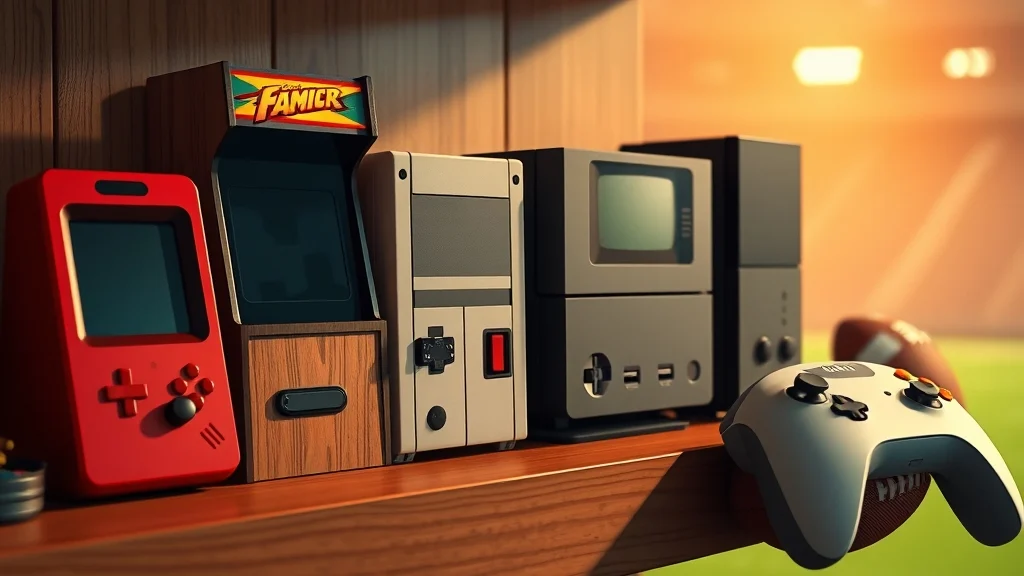
Tecmo Bowl hit arcades in 1987 and the NES in 1989. The NES version had only four plays per team, and that was the whole point. You picked a play, the cutscenes kicked in, and either your receiver was wide open or a linebacker blew up the snap. It had real NFLPA player names but no NFL team names, so teams went by their cities.
Tecmo Super Bowl followed on the NES in 1991 with both NFL and NFLPA licenses. It added a full season, stat tracking, injuries and the most famous video game running back in history: Bo Jackson, who was pretty much unstoppable. It also started a hobby of custom ROM roster updates that fans still keep alive.
John Madden Football and the simulation tradition
John Madden Football launched in 1988 on the Apple II. The famous development story is that Madden refused to put his name on anything less than 11 players per side, which pushed the game toward real football at a time when the hardware barely handled it. The 1990 Sega Genesis version made the series a console hit, and Madden NFL ’94 added the NFL team license.
Bill Walsh College Football started EA’s college series in June 1993, and EA later picked up the NCAA name with NCAA Football 98.
The feature firsts we still use
- Franchise mode (Madden NFL 99): running a team across multiple seasons became the core of simulation football.
- NFL 2K on Dreamcast (1999): broadcast-style presentation and 3D animation that raised the bar for everyone.
- The hit stick (Madden NFL 2005): big hits on the right stick. Fittingly, it arrived with Ray Lewis on the cover, and in Madden 27 it has grown into a complete tackle stick.
- Superstar mode (Madden NFL 06): you built one player and lived his career. It stuck around until Madden NFL 25 removed it, and later came back in new forms.
- Madden Ultimate Team (Madden NFL 10 era): card collecting arrived as an add-on in 2010 and became the business model of modern sports games.
Pro tip: If you want to understand where any modern football mode came from, look at the late PS2 era. Nearly every major Madden mode, from the hit stick to Superstar, first showed up between 2004 and 2006.
Notable editions and moments fans still talk about
The editions fans remember most are Tecmo Super Bowl, the 16-bit Maddens, ESPN NFL 2K5, NCAA Football 14 and the 2024 College Football revival. Each one is tied to a specific moment in football or in gaming, and most of us can tell you exactly where we were when we played them.
Tecmo Super Bowl and our 90s Bills
Tecmo Super Bowl’s rosters come from the 1990 season, the year we went to Super Bowl XXV. That means the cartridge is basically a time capsule of the K-Gun Bills: Jim Kelly, Thurman Thomas, Andre Reed and Bruce Smith all on one team.
Here’s a scenario a lot of us have lived. Say you pick the Bills against a friend who takes the Raiders. You call a run with Thurman, and your friend hand-picks the right defensive play and stuffs it at the line. Now it’s a mind game, because with so few plays in the playbook, guessing your opponent’s call matters more than any rating. Then he hands off to Bo Jackson and the whole thing falls apart. Sound familiar? Tecmo Super Bowl taught a generation that football is chess played at full speed.
ESPN NFL 2K5 and the price war
ESPN NFL 2K5 came out in 2004 at $19.99. That was a direct shot at Madden’s full price, and a lot of fans thought it was the better game, thanks to its first-person mode and broadcast presentation. EA dropped Madden NFL 2005’s price in response. Months later, the license news shut the rivalry down, which is why 2K5 still has an almost mythical reputation.
Cover athletes and the Madden curse
The cover became an event of its own after the series moved from Madden himself to star players around 2000. That brought the “Madden curse,” the superstition that cover stars get hurt. Patrick Mahomes broke it with Madden NFL 20: he was only the second cover player, after Rob Gronkowski, to win a Super Bowl in his cover season, and the first to win Super Bowl MVP doing it.
For us, the cover moment was Josh Allen on Madden NFL 24 in August 2023. Recent covers include Saquon Barkley on Madden NFL 26 and Caleb Williams on Madden 27, the first Bears player ever to get the cover. And yes, we noticed: Josh Allen is in the 99 Club in Madden 27.
| Edition | Year | Why fans remember it |
|---|---|---|
| Tecmo Super Bowl | 1991 | Bo Jackson, real rosters, and the 90s Bills |
| Madden NFL 2005 | 2004 | Hit stick and Ray Lewis on the cover |
| ESPN NFL 2K5 | 2004 | $19.99 price, last licensed 2K sim |
| Madden NFL 25 | 2013 | 25th anniversary, Barry Sanders cover |
| Madden NFL 23 | 2022 | Tribute cover for John Madden, who died in December 2021 |
| Madden NFL 24 | 2023 | Josh Allen on the cover |
Controversies and turning points
The biggest turning point in football video games came in December 2004, when EA signed an exclusive NFL and NFLPA license for simulation football. The second biggest was the college football shutdown in 2013. Between them, those two decisions shaped what we’ve been able to buy for 20 years.
The 2004 exclusive license
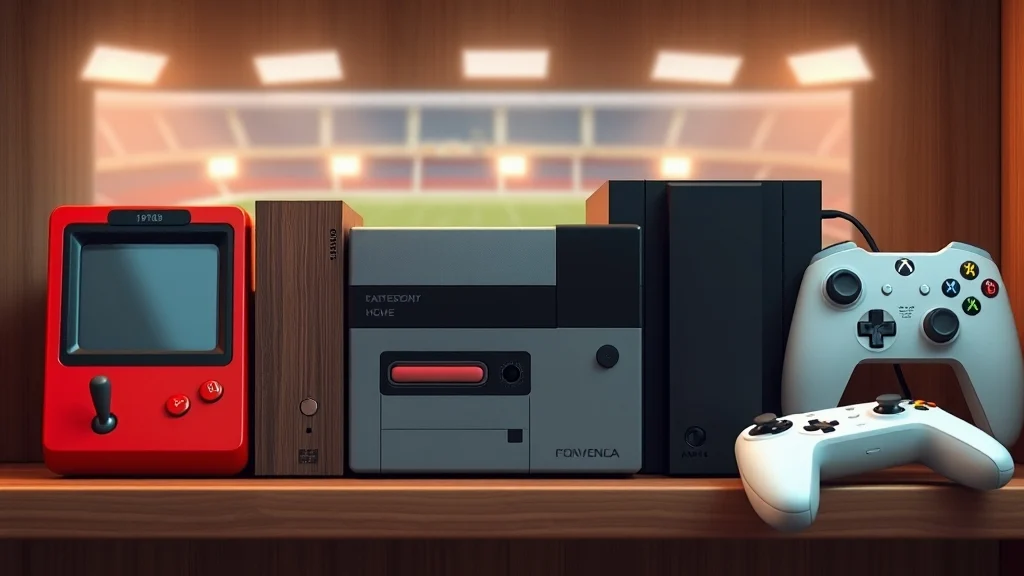
Before the deal, Madden competed against NFL 2K, NFL GameDay and others. After it, no other company could make a licensed NFL simulation. 2K turned to All-Pro Football 2K8 in 2007 with retired legends instead of current players. Midway made Blitz: The League in 2005 with made-up teams and storylines the NFL would never have approved.
People still argue about whether the deal hurt Madden. Let’s look at both sides. Without a direct rival, critics say, yearly releases got stale and features came and went without consequence. Supporters point out that one licensed game every year kept development budgets large. My take: the competition in 2004 made both games better, and the lack of competition since has shown, especially in Franchise mode. The #FixMaddenFranchise campaign in 2020 didn’t come out of nowhere.
2K got back in with an NFL deal in 2020, but it only covers non-simulation games. Madden remains the only licensed NFL simulation.
The college football hiatus
In July 2013, the NCAA said it would not renew its license with EA, as lawsuits over the use of college players’ likenesses moved forward. NCAA Football 14 became the last college game for 11 years. Old copies and consoles sold at collector prices, and fans kept rosters alive with custom edits.
EA said in February 2021 that it was bringing the series back. EA Sports College Football 25 launched in July 2024, and players who opted in were paid for their name, image and likeness. College Football 27 followed on July 9, 2026, and it’s the first game in the series available on PC.
Microtransactions, the newest fight
The current controversy is money, again. Before College Football 27 launched, Ultimate Edition players found they could buy skill points and coach levels in Dynasty and Road to Glory with College Football Points, a currency you get by spending real money. Buying an advantage inside an offline career mode bothered plenty of longtime fans.
Heads up: Ultimate Team modes and paid currency can change after launch through updates. Check the official EA FAQ for the current edition and early access details before you buy.
Why the history of football video games still matters
The history of football video games still matters because the old decisions, from licenses to Franchise mode, decide what we can play today. Knowing that history makes you a sharper buyer and a better player. If you’re comparing current releases, our sports games hub collects guides and ratings across the genre.
What carries over from the old games
The two traditions from the 1980s are still around. Simulation lives on in Madden 27’s Persona Engine, which gives every NFL player a personality that drives his demands and reactions in Franchise. The arcade spirit of Tecmo and Blitz survives in casual modes and fan-made projects. And the NFL Films broadcast style that NFL 2K made popular in 1999 is now the baseline for every sports game’s presentation.
Platform differences in 2026
How you can play football games has spread out a lot. Madden 27 came out on August 13, 2026 for PS5, Xbox Series X and S, Windows and Nintendo Switch 2, with an earlier Apple Arcade release on August 4. College Football 27 skipped Nintendo and came to PS5, Xbox Series X and S, and PC through the EA app, Steam and Epic. Compare that with the 1990s, when Genesis and SNES versions of the same Madden played noticeably differently.
Common mistakes and myths players repeat
- “Madden was the first football video game.” No, it arrived in 1988, 16 years after the Odyssey.
- “Tecmo Bowl had real NFL teams.” The NES version used NFLPA player names but no NFL team names. Tecmo Super Bowl had both.
- “EA has always had the NFL to itself.” The exclusive license only began in December 2004.
- “College football games stopped because nobody bought them.” The 2013 shutdown came from the licensing and likeness disputes, not from sales.
- “The Madden curse is real.” Mahomes and Gronkowski both won titles in their cover seasons.
A decision rule for retro players
If you want history you can actually play, go by what you care about. If you want quick multiplayer, pick Tecmo Super Bowl. If you want depth that came before modern Franchise mode, try a PS2-era Madden or ESPN NFL 2K5. If you want real college rosters, the only licensed options are NCAA Football 14 or anything from 2024 on.
Pro tip: Old sports games make great couch co-op because the controls are simple. Hand a friend a Tecmo Super Bowl controller and they’ll understand it in about one play, then claim Bo Jackson is overpowered by the second.
FAQ
What was the first football video game?
The Magnavox Odyssey’s Football game from 1972 usually gets the credit. It used a plastic screen overlay and a paper board for the rules. Mattel’s 1977 handheld and Atari’s 1978 arcade Football were the first ones that really played like football.
When did the first Madden game come out?
John Madden Football came out in 1988 on the Apple II, with MS-DOS and Commodore 64 versions after that. The 1990 Sega Genesis version is the one that turned it into a hit.
Why can’t other companies make NFL simulation games?
In December 2004, EA signed an exclusive license with the NFL and NFLPA for simulation football games. 2K signed a deal with the NFL in 2020, but it only covers non-simulation games.
Why were there no college football games from 2014 to 2023?
The NCAA said in July 2013 that it would not renew its license with EA, while lawsuits over the use of player likenesses were still going. EA brought the series back in July 2024 with College Football 25, and players who opted in got paid for their name, image and likeness.
Is the Madden curse real?
No, it’s a fun superstition, not a real pattern. Several cover athletes got hurt or slumped, but Patrick Mahomes won the Super Bowl and Super Bowl MVP in his Madden NFL 20 cover season.
Has a Bills player been on the Madden cover?
Yes, Josh Allen was on the cover of Madden NFL 24, which came out in August 2023. He’s also one of the players rated 99 in Madden NFL 27.
Sources

1 comment