

Key facts
- Madden NFL 27 launched August 13, 2026 on PS5, Xbox, Switch 2 and PC.
- The new Persona Engine gives every player motivations that shape contracts, holdouts and trade demands.
- Emergent Actions replace the old weekly flow from Madden 26, so prioritizing matters more than clearing a checklist.
- Every NFL tag type is in the game, including Exclusive, Non-Exclusive and Transition tags plus RFA tenders.
- EA says roster quality now matters more than playbooks, so talent beats scheme tricks.
The best Madden 27 franchise tips all come back to one idea: you’re managing people now, not just ratings. The new Persona Engine means players react to how you treat them, so contracts, playing time and trades all come with consequences. Get the people part right and the wins follow. Here’s what we’re working with.
How does Franchise mode work in Madden 27?
Franchise mode in Madden 27 is a season-by-season team management mode built on a new system called the Persona Engine. According to EA, the Persona Engine gives every NFL athlete a distinct personality that informs their motivations, how they think, and how they respond, transforming your Franchise into a reactive ever-evolving league shaped by every move you make. That one change ripples through everything else in the mode.
The Persona Engine
Think of it as a personality file sitting under every player’s ratings. The Persona Engine is a player dna with a mindset and a career focus. More importantly, it isn’t a once-a-year check. Players will be dynamic week to week during your season in Franchise Mode.
In practice, this is what produces the mode’s headline features. The overhaul brings three of the mode’s most requested features in its history: Player Holdouts, Trade Demands, and Emergent Actions. Your veteran receiver who sits behind a rookie isn’t just a depth chart number anymore. He has opinions about it.
The Weekly Hub and Emergent Actions
The weekly loop changed too. Emergent Actions replace the old weekly flow from Madden NFL 26 with a focus on interaction and prioritization. Contract talks, trade chatter, morale updates and matchup prep all land in the Weekly Hub, and a Weekly Hub generates league-wide events for human and AI teams, so the CPU clubs deal with the same drama you do.
The framing is different as well. Instead of completing a checklist of tasks as the owner of a team, gamers need to click on the headlines and make decisions around a media narrative. It sounds cosmetic, but it changes how you play: you’re picking which fires to put out, not ticking boxes.
The News Center and ticker
The league around you is visible at all times. A persistent news ticker now tracks league activity across Franchise Mode, while breaking stories appear through alerts that include commentary and league updates. A dedicated News Center allows players to follow trades, rumors, contract disputes, draft coverage and events happening around the NFL. You can also filter your story types, which matters more than it sounds once the headlines pile up.
| System | What it does | Why it matters to you |
|---|---|---|
| Persona Engine | Gives each player motivations and a career focus | Drives holdouts, trade demands and negotiation behavior |
| Emergent Actions | Replaces the Madden 26 weekly task flow | You choose what to address each week |
| Weekly Hub | Generates events for every team | CPU rivals face cap and morale problems too |
| News Center | Tracks trades, rumors, disputes and the draft | Your best scouting tool for trades and free agency |
What do you need before you start a Madden 27 franchise?
You need a copy of Madden NFL 27, a clear plan for which currencies apply to your save, and a decision on whether to bring in a College Football 27 coach. Madden NFL 27 launches August 13 on PS5, Xbox, Switch 2 and PC, so on Xbox that means Xbox Series X and S. If you’re still getting your bearings across the game’s modes, our madden 27 hub collects every guide in one place.
Franchise Points vs Staff Points
These two get confused constantly, and they’re not the same thing. Franchise Points are used for coach progression and are available through the free Team Pass track. Staff Points are separate and must be earned inside each Franchise save.
Pre-orders came with a head start on both. MVP Bundle owners receive 300 Franchise Points, with MVP+ Members receiving an additional 200 Franchise Points, for a total of 500. Separately, eligible pre-order players also begin every new Franchise league with 200 Staff Points, consistent with Madden NFL 26.
None of this touches Ultimate Team currency. Coins and Franchise Points live in separate economies, so if you’re splitting time between modes, our mut 27 tips guide covers the card side and our guide on madden 27 coins explains how that currency works.
The College Football 27 coach import
If you played Dynasty in the college game, you have a bonus option. Dynasty Mode coaches can be imported into Madden NFL 27, unlocking a special College Coach archetype that includes exclusive roster-building advantages and development perks. For a rebuild, development perks are worth more than almost anything else you can start with.
Pre-start checklist
- Decide solo or online league. Online leagues with friends run contract talks live.
- Check your Franchise Point balance from the Team Pass and any pre-order bonus.
- Decide whether to import a College Football 27 Dynasty coach.
- If you’re a commissioner, decide whether pre-order bonuses stay on.
- Pick your game-day approach: play every snap, Coach Mode, or sim.
Heads up: Staff Points from a pre-order apply to every new league, but points you earn inside one save don’t carry into the next. Don’t start a throwaway test league expecting to keep its progress.
Which setup choices matter most at the start?
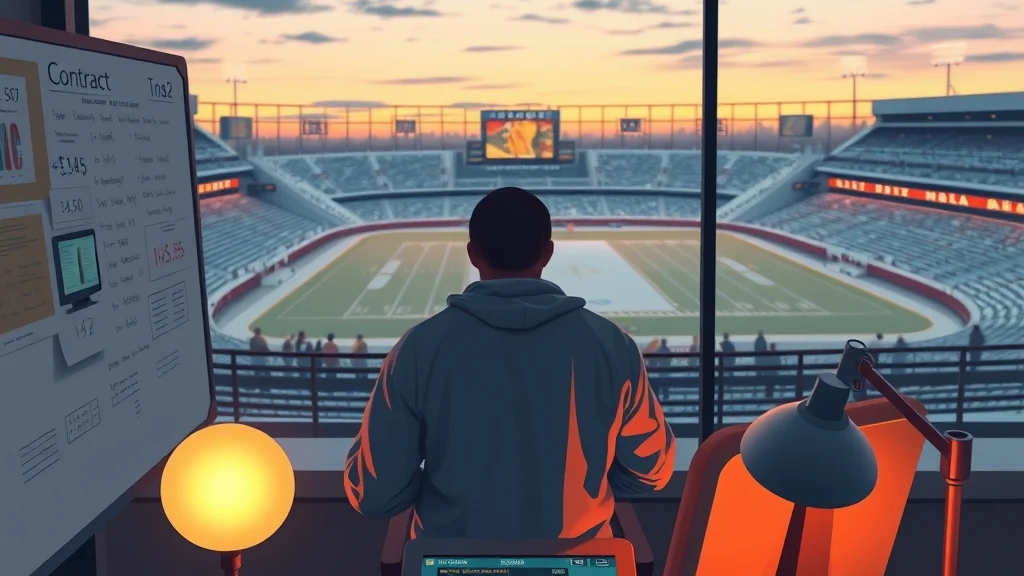
The setup choices that matter most are your team, your coach, your league type and how you handle game days, because each one changes how hard the Persona Engine pushes back. Most of these can’t be undone without starting over, so take five minutes here instead of five seasons of regret.
| Setup choice | Options | Best for | What to watch |
|---|---|---|---|
| League type | Solo or online with friends | Solo for learning, online for rivalry | Online negotiations happen live |
| Team | Contender or rebuild | Contender for a quick ring, rebuild for long saves | Contenders often carry expensive stars who expect raises |
| Coach | Custom, real coach, or CFB 27 import | Import for development perks | College Coach archetype requires a Dynasty save |
| Pre-order bonuses | On or off (commissioner choice) | Off for fair online leagues | Uneven starts frustrate league members |
| Game day | Play, Coach Mode, or SuperSim | Coach Mode for long saves | Sim results lean on roster quality |
| Difficulty | Rookie through All-Madden | Match to your skill | Harder settings expose thin rosters |
League type and fairness
Online leagues get the full contract experience. Contract features like holdouts, trade demands and tags apply in multiplayer too, which includes live with friends if you have an online franchise. Commissioners have one key fairness lever: pre-orders of Madden NFL 27 will include Franchise Points that can be used when starting a new save, with commissioners given the option to disable those bonuses. In a league of friends, I’d turn them off. Nobody wants a rivalry decided by who clicked pre-order.
Contender or rebuild?
Taking over a contender feels like the easy road, and for one season it is. The catch is that contenders tend to have stars approaching new deals, and those stars now have personalities and leverage. A rebuilding team has fewer egos and more cap room, which makes it the friendlier way to learn the new systems.
Game day approach
This is the year Coach Mode finally arrives properly. On game day, Coach Mode lets the user call plays and manage pre-snap decisions while CPU-controlled players execute after the snap. For a long dynasty, it’s a sweet spot between playing 17 full games a year and simming everything blind.
Pro tip: If you plan to sim a lot, build talent first. EA says roster quality has a bigger influence on results this year, so a deep roster sims better than a clever scheme.
Madden 27 franchise strategies that win, step by step
The winning strategy in Madden 27 Franchise is to manage contracts and morale before they become crises, spend money with discipline, and build through talent rather than scheme. Here’s the order a player actually meets these decisions in a season.
- Read the News Center before every week.
- Clear the highest-stakes Emergent Actions first.
- Extend core players a year early.
- Pick the right tag type for each expiring star.
- Set a hard budget before Free Agency Frenzy.
- Draft for talent, then bid on undrafted rookies.
- Let your scheme follow your roster.
Prioritize, don’t complete
Since the weekly flow is now about prioritization, you won’t get to everything, and that’s the design. Handle anything involving a starter’s contract or morale first, then trades, then everything else. A backup’s mood can wait a week. A franchise quarterback’s can’t.
Negotiate like it’s a real negotiation
Contracts are now a real back-and-forth. Contract talks become an interactive negotiation mini-game with holdouts, trade demands and a patience system. The toolkit is deep too: Madden 27 adds a multi-session negotiation interface and announces guarantees, void years, incentives, no-trade clauses, custom structures and longer street-free-agent deals.
The patience system is the part to respect. Lowballing over and over burns goodwill. Use guarantees and incentives to close the gap instead of just the base salary number, since they let you give a player security without wrecking next year’s cap.
Pick the right tag
The Exclusive Franchise Tag locks a player to your team. The game also includes the Non-Exclusive Franchise Tag and the Transition Tag, and franchise and transition tags are now fully represented, along with restricted free agent tenders and compensation rules.
| Tag | Real NFL rule | Use it when |
|---|---|---|
| Exclusive Franchise | No other team can negotiate | He’s a true cornerstone and you can’t risk losing him |
| Non-Exclusive Franchise | Others can offer; you can match or take two first-round picks | You want him but would accept a haul |
| Transition | You can match any offer, no draft compensation | You want to see his market without paying top dollar |
The rules above are the real NFL versions, and the game models them. Check the in-game tag screen for the exact cost before you commit.
Survive Free Agency Frenzy
Free agency now plays out in real time. Madden NFL 27 introduces an hour-by-hour signing period where player movement happens continuously. During the offseason, players will enter a “free agent frenzy” mini-game, where breaking news alerts from ESPN pop up, announced by the NFL Network’s Scott Hanson. Set your budget and your top three targets per position before it starts. Panic bids are how cap sheets die.
Draft, then dig
The draft doesn’t end the talent hunt. After the NFL Draft concludes, franchises also gain access to a fresh pool of undrafted rookie free agents, and these undrafted rookie free agents that can be bid on are cheap lottery tickets for special teams and depth.
A worked example of a Bills franchise from start to finish
Here’s how these tips play out over one full season with our team. The numbers below are a hypothetical scenario to show the decision process, not actual Madden 27 ratings or cap figures.
Preseason, a holdout brewing
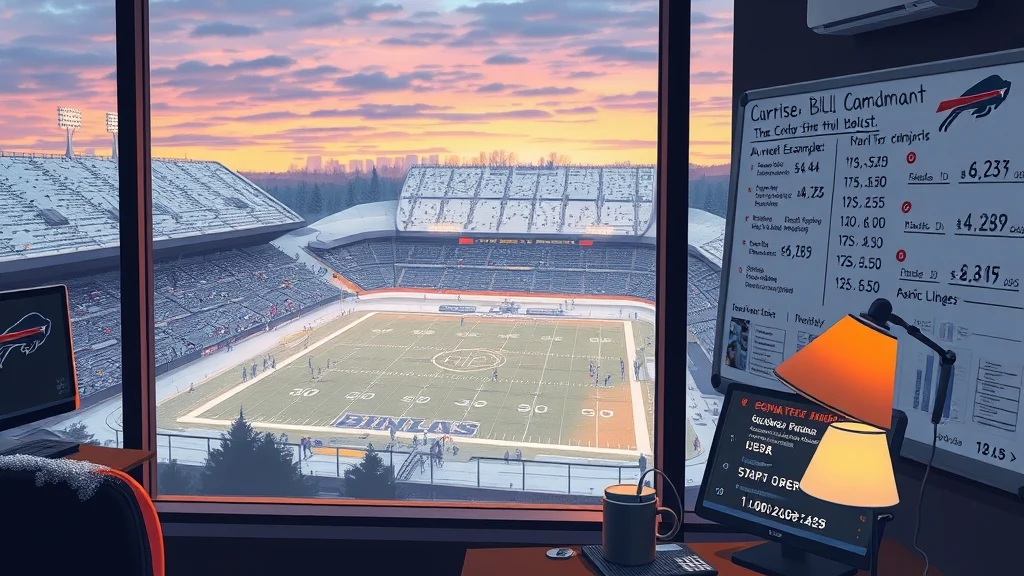
Say you take over the Bills in year one. Josh Allen is locked up long term in real life, so the quarterback is settled. The pressure point is a hypothetical starting cornerback entering the last year of his deal, coming off a strong season. In week one, a headline pops up in the News Center: he wants a new deal and is unhappy with talks.
You have $18M in hypothetical cap space. Your first instinct might be to ignore it and play the season. The better move is to open negotiations in the preseason, offer a guarantee-heavy deal with modest base salary early and incentives later. He doesn’t love the first offer, but because you didn’t lowball him three times, his patience holds. You close the deal in a second session.
Midseason, a trade request
By week 8, a veteran receiver who lost snaps to a rookie asks for a trade. This is exactly the scenario the Persona Engine creates, since players will request trades directly to you. You check the News Center, see a contender losing a receiver to injury, and move him for a mid-round pick before the request turns into a locker room problem.
Game days in Orchard Park
Late in the season, the weather becomes a factor. Coach Mode, re-tuned SuperSim, real coordinators, dynamic weather, revised Wear and Tear and smarter CPU trade logic are part of the announced Franchise package. A December game in snow means you lean on the run game and short throws. Anyone who remembers the old Rich Stadium wind games knows the drill: the forecast is part of the game plan.
Offseason, the tag decision
Your hypothetical edge rusher hits free agency. He’s very good, not elite, and asking for top-of-market money. You use the Transition Tag. A team makes an offer, you look at the cap and decide to match, keeping him at a number you chose rather than a tag number set for you.
Free agency and draft
You enter Free Agency Frenzy with a $12M budget and three safety targets. Target one signs elsewhere in the first hour. You don’t overpay target two out of panic. You sign target three on a two-year deal, then draft a receiver to replace the one you traded and grab two undrafted linebackers for special teams.
| Phase | Decision | Why it worked |
|---|---|---|
| Preseason | Extended the cornerback early | Avoided a holdout and patience penalties |
| Week 8 | Traded the unhappy receiver | Turned a morale problem into a pick |
| December | Adjusted to the snow | Weather changes what works |
| Offseason | Transition Tag on the edge rusher | Kept a good player at a chosen price |
| Free agency | Stuck to the budget | Avoided an overpay in the frenzy |
Pro tip: Open talks with any starter in his final contract year during the preseason. Waiting until the trade deadline gives his personality more time to sour.
Advanced tactics and edge cases
The advanced edge in Madden 27 Franchise comes from reading the league better than the CPU does, timing your contract moves, and building a roster that fits the scheme instead of forcing a scheme onto a roster. These are the habits that separate a good season from a ten-year dynasty.
Let your roster set the scheme
This year the talent matters more than the call sheet. EA says roster quality will have a greater impact on results while reducing the influence of playbooks. CPU teams also evolve: a franchise that moves on from one type of quarterback and drafts another may alter its offensive identity to better match its roster.
That cuts both ways. Watch division rivals in the News Center when they change quarterbacks, because their offense may look completely different next fall. And if you trade for a pocket passer after years with a scrambler, rebuild your playbook around him instead of forcing the old reads.
Smarter CPU trade logic
The days of fleecing the CPU with three backups for a star are getting harder. EA says that across all aspects of a season and all assets available for teambuilding, Franchise will now see the truest to life version of Trading in the NFL. Use the trade request system to your advantage: CPU players asking out of their teams show up in headlines, and those are the deals most likely to go through at a fair price.
Use real coordinators wisely
Coaching staff in Franchise now include real NFL coordinators. When choosing staff, pick coordinators who fit your roster’s strengths instead of the biggest name. A run-heavy roster benefits more from a run-minded coordinator than a famous passing guru.
Wear and Tear over a long season
Wear and Tear returns, revised for this year. It started in Madden 26, when EA added Coach Abilities, Playsheets, Weekly Strategy, Wear and Tear and every other improvement. For a dynasty, rotate heavy-workload positions like running back and defensive line in blowouts. Fresh legs in January beat a few extra yards in October.
Online league edge cases
In online leagues, a few things are worth agreeing on up front:
- Whether pre-order bonuses are on or off
- How long members get to respond to live negotiations
- Whether trades between human teams need commissioner approval
- How Coach Mode and simmed games count for league records
Heads up: EA hasn’t published exact formulas for how quickly a player’s patience drops during talks. Treat every rejected offer as a cost, and don’t test the limit with your best players.
Common mistakes Madden 27 franchise players make
The most common mistake in Madden 27 Franchise is playing it like Madden 26, ignoring player personalities and treating contracts like a spreadsheet. We’ve all been the coach who let a star walk because we wanted to save $2M. Here’s the full list.
Contract and personality mistakes
- Lowballing repeatedly. The patience system punishes it. Make a serious first offer and adjust with structure, not insults.
- Waiting until the last year. Players in contract years are the likeliest to hold out. Extend early.
- Using the wrong tag. An Exclusive Franchise Tag on a good, not great, player wastes cap. Save it for true cornerstones.
- Ignoring benched veterans. A starter who loses his job may ask out. Trade him on your timeline, not his.
Roster and scheme mistakes
- Chasing playbook exploits. With roster quality mattering more, a cheesy scheme can’t hide a weak roster like it used to.
- Forgetting undrafted free agents. That post-draft pool is free depth most players skip.
- Overbidding in Free Agency Frenzy. The clock is designed to make you panic. A budget set beforehand is your defense.
Workflow mistakes
- Skipping the News Center. It’s your scouting department, trade desk and early warning system in one.
- Trying to clear every Emergent Action. You’re not supposed to. Prioritize starters and contracts.
- Mixing up currencies. Franchise Points, Staff Points and MUT coins are three separate things.
| Mistake | What happens | Fix |
|---|---|---|
| Repeated lowball offers | Player’s patience runs out | Serious first offer, adjust with incentives |
| Contract year neglect | Holdout during the season | Extend a year early |
| Exclusive tag on depth | Cap space wasted | Use the Transition Tag instead |
| Panic bidding | Overpaid free agent | Set budget and targets in advance |
| Ignoring the news | Missed trades and rival changes | Check the News Center every week |
| Playbook over talent | Weak sim results | Build the roster first |
Old-school Madden habits die hard, and some of us have been running the same franchise playbook since the days of Thurman Thomas catching swing passes on our screens. This year rewards patience, planning and treating players like people. It turns out Bruce Smith wasn’t just a rating either.
FAQ
Can players hold out or demand a trade in Madden 27 Franchise?
Yes. The Persona Engine adds player holdouts and trade demands, and players can request a trade directly from you during the season.
What is the difference between Franchise Points and Staff Points in Madden 27?
Franchise Points are a coach progression currency tied to the Team Pass track and pre-order bonuses. Staff Points are earned inside each individual Franchise save and spent there.
Can I import my College Football 27 coach into Madden 27?
Yes. Dynasty coaches from College Football 27 can be imported, which unlocks a College Coach archetype with roster-building and development perks.
Does Madden 27 have a Coach Mode in Franchise?
Yes. Coach Mode lets you call plays and handle pre-snap decisions while the CPU controls players after the snap.
Can commissioners turn off pre-order bonuses in online franchises?
Yes. Commissioners can disable the pre-order Franchise Point bonuses when setting up a league, which keeps things fair for members who did not pre-order.
Do playbooks still matter in Madden 27 Franchise?
Less than before. EA says roster quality has a bigger impact on results this year, so a talented roster running a basic scheme should beat a thin roster running a clever one.
Sources


2 comments